OUTDOOR
Choosing decking material for North Carolina humidity
The board you walk on matters less than the framing under it, and every material on the market fails the same way if the ledger is wrong.
By Darnell Jessup, Outdoor Lead. Published , updated .
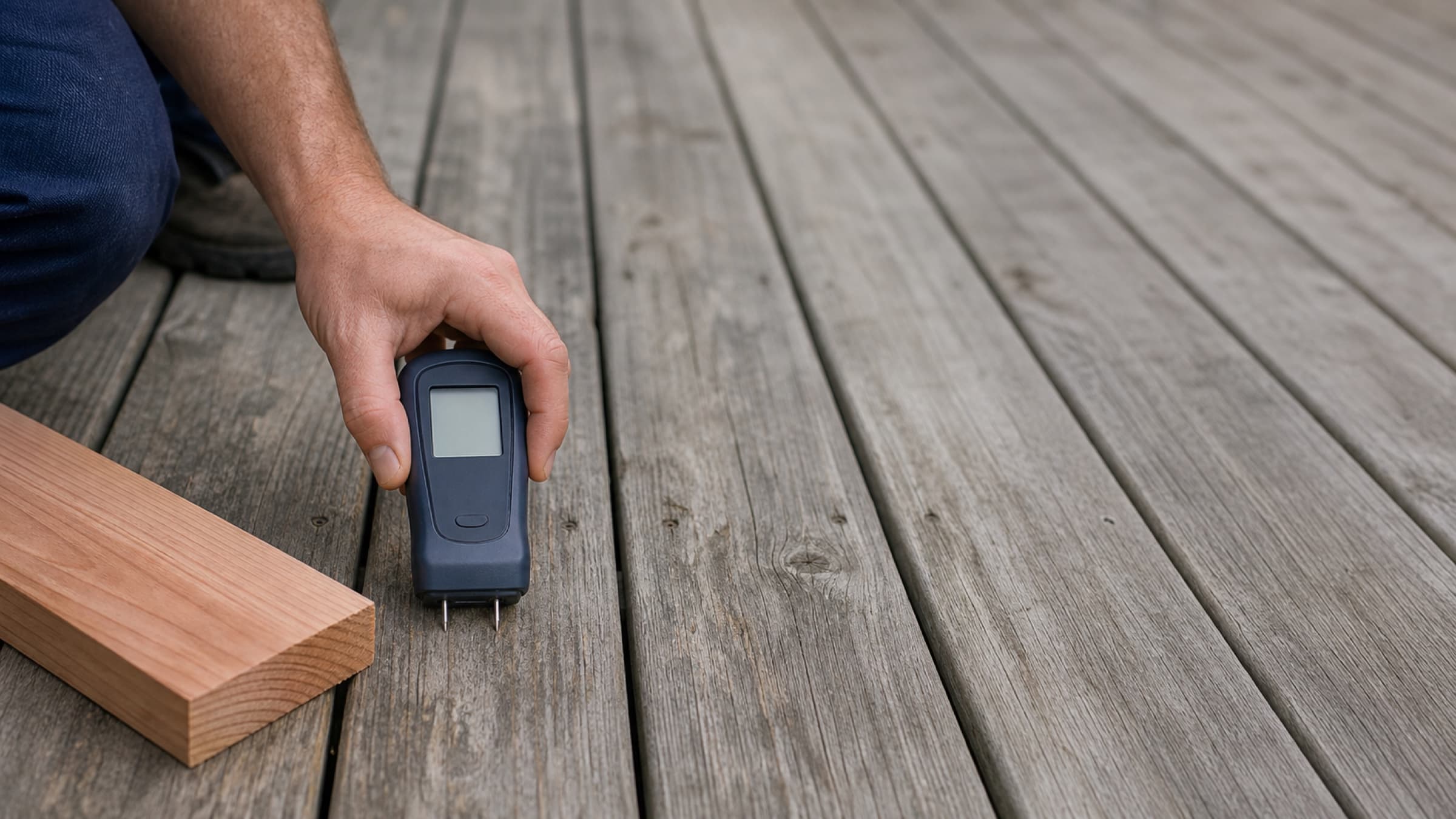
What this climate does to a deck
The Triangle is hard on outdoor timber in a specific way: it is hot, it is humid for months, and it rains heavily and then dries out completely.
That cycle is the problem. Wood that gets wet and stays wet rots. Wood that gets wet, dries fast, gets wet again and dries fast again also cups, checks and pulls its fasteners, because every cycle moves it. Add several months a year of ultraviolet exposure and a spring pollen load that holds moisture against the surface, and you have a set of conditions that punishes cheap details ruthlessly.
Every material below can work here. None of them survives bad framing.
Pressure-treated pine
The default, and the cheapest by a wide margin.
What it does well. It resists rot and insects because of the treatment, it is strong, it is available everywhere, and it is entirely respectable when it is looked after.
What it does badly here. It arrives wet. Treated lumber is sold soaking, and it shrinks substantially as it dries in a Triangle summer, which is why so many treated decks show gaps and cupped boards within eighteen months. It also needs recoating every two to three years, and the day you stop is the day it starts going grey and splintery.
Choose it if budget is the driving constraint and you will genuinely maintain it. Buy the best grade available rather than the cheapest, let it dry before finishing it, and fasten it properly.
Cedar
Naturally rot resistant, stable, and much nicer to walk on barefoot in July because it does not hold heat the way a dark composite does.
What it does well. It moves far less than treated pine, it takes a finish beautifully, and it smells like a deck should. It is the material we build most often for people who want timber.
What it does badly. It is soft, so it dents and scratches. It needs a coat every second or third year to hold its colour, and if you leave it alone it goes silver. Some people want exactly that, which is fine, but it should be a decision rather than a surprise.
Choose it if you want real wood, you accept a maintenance cycle, and you care how it feels underfoot.
Composite and PVC
Wood flour and plastic, or plastic alone. The market has improved enormously and the early products that gave it a bad name are long gone.
What it does well. It does not rot, it does not need staining, and it holds its appearance for a long time. The good capped products handle Triangle sun without significant fading. It is the lowest maintenance option by a distance.
What it does badly. It gets hot. A dark composite board in direct July sun is genuinely too hot to stand on barefoot, and that catches people out on south-facing decks with no shade. Cheaper uncapped products stain from pollen and mildew and are difficult to clean. It costs substantially more up front. And it is not structural: the framing underneath is still timber, and it still has to be built properly.
Choose it if you do not want a maintenance cycle, and either your deck is shaded or you choose a lighter board. If sun is a problem, a pergola over the seating end solves it and looks better than a smaller deck.
The framing is what actually decides the lifespan
Here is the part that matters more than any of the above, and it is the reason we replace so many decks that are only twenty years old.
The ledger. The board bolting the deck to the house is where almost every failure starts. It must be lagged or screwed with structural fasteners into solid framing, never nailed, and it must be flashed so water cannot run behind it into the rim joist of your house. An unflashed ledger rots the house, not just the deck. That is exactly what we found on the Apex deck we rebuilt.
Joist tape. A self-adhesive butyl strip along the top of every joist, so water sitting between the board and the joist cannot get into the fastener holes. It costs very little and it roughly doubles the life of the framing in this climate. We put it on every deck we build.
Fasteners. Modern treated lumber corrodes ordinary galvanised hardware. Stainless or properly rated coated fasteners, every time.
Footings and drainage. Piedmont clay swells and shrinks. Footings below frost depth, on ground that has been compacted, and water directed away rather than allowed to pool.
The honest ranking
If you are asking which we would put on our own house: cedar on the boards, obsessive detailing underneath, and a shade structure over the part you sit in.
If you are asking which we would recommend to someone who will never stain anything: a light coloured capped composite, same detailing underneath.
If you are asking which is best value: well specified pressure-treated, built properly, maintained on a schedule.
Notice that all three answers contain the same second half.
Before you replace, check whether you need to
A greyed, splintery deck is often refinishable. Sanding, cleaning and recoating a structurally sound deck costs a fraction of replacing it, and we will tell you when that is the right call. We pull two boards, look at the framing and the ledger, and then advise.
That is on the deck repair page. If the ledger has been leaking for years, the answer will be replacement, and the reason will be in a photograph rather than in a sales pitch. New builds are on the deck building page.
The work this article is about
- Deck BuildingA new deck, designed and built from footings up, with the ledger flashed properly and footings sized for Piedmont clay.
- Deck Repair and RefinishingBoard and railing repair, and stripping and resealing a deck that has gone grey, on a frame that is still sound.
- Pergolas and Shade StructuresPergolas, arbours and covered structures, anchored for wind uplift and oriented to shade the hours you actually sit outside.
Jobs where this came up
- Cedar deck and pergola replacing a failed deck in ApexA twenty year old pressure-treated deck with rotten framing replaced with cedar, cable railing and a pergola over the dining end.
- Paver patio, seat wall and fence line in ClaytonA cracked and settling concrete slab replaced with a bluestone paver patio on a rebuilt base, plus a cedar privacy fence.