OUTDOOR
A seasonal home maintenance calendar for the Triangle
A maintenance calendar written for this climate, where the enemies are humidity, pollen, hail and clay rather than deep frost.
By Lena Marchetti, General Manager. Published , updated .
Why a generic calendar does not work here
Most home maintenance calendars are written for a climate with a hard winter and a mild summer. Ours is the opposite.
The things that damage Triangle houses are humidity for five months of the year, a spring pollen load that holds moisture against every surface, hail and wind in spring and autumn, hurricane remnants arriving inland with a great deal of rain, and clay soil that swells and shrinks under everything you have built on it.
This calendar is organised around those.
January and February
The coldest part of the year, and the quietest for outdoor work.
- Test the heating properly. Run it, and pay attention to whether it is using auxiliary or emergency heat more than it should. A heat pump quietly running strip heat is the most expensive fault in a Triangle house and it produces no symptom other than a bill.
- Check exposed plumbing in crawlspaces and garages before a hard freeze, and know where your main shutoff is.
- Look at the ceilings after any ice storm. Ice dams are rare here but not unknown on low slope sections and north facing planes.
- Book spring work now. Cooling maintenance and any exterior job books out fast once the weather turns, and January is when the calendar is open.
March
The month everything wakes up, including the pollen.
- Roof and flashing inspection. Before the spring storm season rather than after it. Winter finds the weak flashing and spring finds out whether you fixed it. (Roof inspection.)
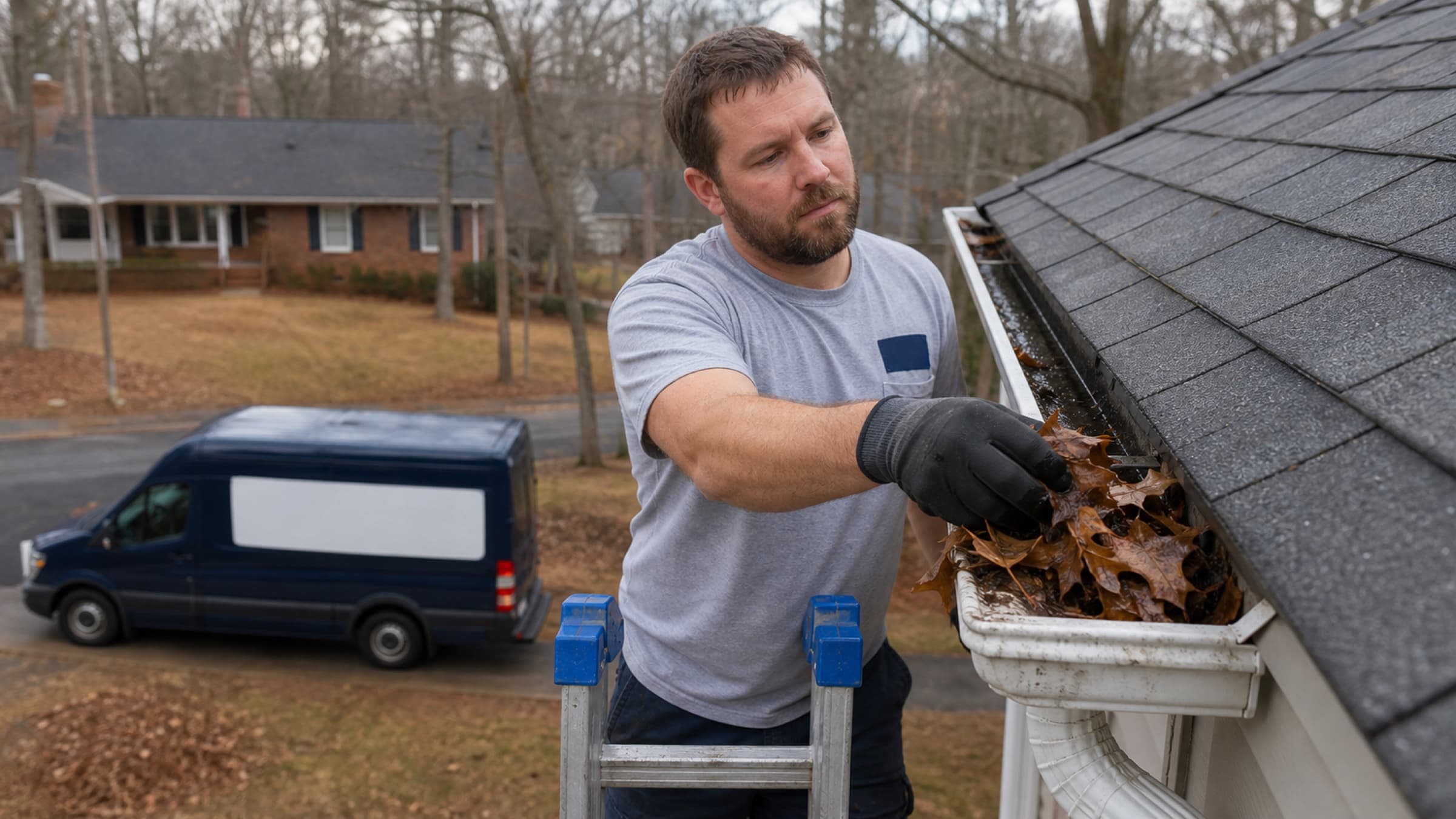
- Gutters, before the pollen. Then again after.
- Walk the foundation. Clay heaves over winter. Look for new cracks, for soil pulling away from the wall, and for grade that has settled back towards the house.
- Deck inspection. Push a screwdriver into the ledger area and any joist end that stays damp. Soft timber is not a spring cosmetic problem.
April and May
- Cooling maintenance, before the first heat. Not in July, when everybody else has had the same idea. The point of this visit is to find the failing capacitor while it is still a scheduled repair. (AC maintenance.)
- Irrigation start-up. Slowly, zone by zone, watching every head. Never at full pressure into a system full of air.
- Wash the pollen off everything horizontal. It is not just cosmetic: pollen holds moisture against timber and against composite decking, and that is where mildew starts.
- Check the condensate line. A blocked drain in a Triangle August is the most common cause of water damage from HVAC equipment we see. Clear it while it is dry.
June, July and August
Humidity season, which is a maintenance season in this region even though nothing outdoors wants to be done in it.
- Watch the indoor humidity. Fifty percent or below is the target. Above sixty in a conditioned house means something is wrong: oversized equipment, duct leakage into a crawlspace, or a genuine need for dehumidification.
- Check the crawlspace at least once. A vented crawlspace in a Triangle August is a condensation chamber. Look for damp insulation falling out of the floor, and for standing water.
- Filters monthly while the system is running constantly.
- Watch the lawn honestly. Fescue struggles in this heat and the correct answer in August is usually to keep it alive rather than to make it beautiful.
- Hurricane season begins. Clear the gutters, secure anything that flies, and photograph your roof from the ground on a clear day. A dated before photograph is worth a great deal in a claim.
September and October
The best working weather of the year, and the busiest exterior season.
- Heating check before the first cold night. Furnaces fail the first time they are asked to run hard, which is a night in the low thirties when nobody wants to be waiting.
- Chimney and flue if you have one.
- Irrigation winterisation, late October into November, before the first hard freeze. Details in winterising an irrigation system.
- Reseed and overseed fescue. Autumn, not spring. This is the single most effective lawn month of the year in the Piedmont.
- Second storm season. Hurricane remnants reaching this far inland bring rain rather than wind, and rain finds every flashing detail you did not fix in March.
November and December
- Gutter clean, after the leaves are actually down. Doing it too early means doing it twice. Most Triangle oaks are not finished until well into November. (Gutter work.)
- Autumn clean-up and bed preparation. (Seasonal cleanup.)
- Disconnect and drain hose bibs.
- Check the grade and the downspout discharge before the winter rain. Water against a foundation in clay is how basements get wet and how slabs move.
- Test smoke and carbon monoxide alarms, and replace anything over ten years old. The whole detector, not the battery.
The three things that matter most
If you do nothing else on this list:
- Keep water away from the building. Gutters, downspouts, grade and flashing. Almost every expensive repair we do started as water going somewhere it should not.
- Service the heating and cooling before the season, not during it. It is cheaper, it is available, and it is the difference between a repair and an emergency.
- Look at your crawlspace or basement four times a year. Ten minutes with a torch finds problems a year before they find you.
The version where you do not have to remember
The calendar above is what our maintenance plans automate. The visits are scheduled to these months, we text you when one is due, and the honest reason people buy them is not the discount, it is that they stop having to keep this list in their head.
Everything here can also be booked one visit at a time. The full service list has what each one covers and what it costs.
The work this article is about
- Roof InspectionAn hour on your roof with a written report and photographs of every plane, so you know what you are dealing with before you spend anything.
- AC MaintenanceA scheduled tune-up for an air conditioning system that is still working, to keep it that way through the season.
- Gutter InstallationSeamless gutters formed on site to your rooflines, with downspouts sized and routed to take water away from the foundation.
- Irrigation ServiceSprinkler repair, controller programming, backflow testing and winterisation, on systems we did not have to install.
- Seasonal CleanupTwo scheduled cleanups a year, in March and November, timed to when Triangle oaks and pines actually finish dropping.
Jobs where this came up
- Cedar deck and pergola replacing a failed deck in ApexA twenty year old pressure-treated deck with rotten framing replaced with cedar, cable railing and a pergola over the dining end.
- Paver patio, seat wall and fence line in ClaytonA cracked and settling concrete slab replaced with a bluestone paver patio on a rebuilt base, plus a cedar privacy fence.