ROOF
How a storm damage insurance claim actually works
A roof claim has three parties with three different jobs, and most of the trouble comes from a contractor promising to do the insurer's part or yours.
By Tomás Reyes, Roofing Lead. Published , updated .
Three parties, three jobs
A storm claim goes wrong when somebody does somebody else's job.
You own the claim. You file it, you decide whether to accept the settlement, and you pay the deductible.
Your insurer decides what is covered and what it will pay. Their adjuster inspects the damage and writes a scope.
Your contractor documents the damage, attends the inspection, answers technical questions, and does the repair. That is the whole list.
We do not negotiate with your insurer, and we say so at the first visit rather than in the small print. We are not public adjusters and we are not licensed to act for you in a claim. Any roofer who tells you they will "handle the whole thing" is either using loose language or doing something they are not licensed to do.
The timeline, in order
Day zero to two: get it documented. Do not wait for the insurer. The strength of a hail claim decays with every week between the storm and the survey, because an insurer can reasonably ask what else happened to the roof in the interval.
Day one to three: file. Most policies require prompt notice. Filing does not commit you to anything, and an unfiled claim on a damaged roof gets weaker, not stronger.
Week one to three: the adjuster inspects. Ask to be told when, and ask your contractor to attend. Two sets of eyes on the same roof at the same time settles most disagreements before they become disagreements.
Week two to six: the scope and the settlement. You receive a scope of loss and a payment, usually in two parts. The first is actual cash value, which is the replacement cost minus depreciation. The second, recoverable depreciation, is released after the work is completed and invoiced.
Then the work. Which usually cannot start until the first payment arrives.
What good documentation looks like
An adjuster reads photographs, not adjectives. Ours produce, on every claim:
- A dated photographic survey, roof plane by roof plane, with a scale in frame and chalked test squares showing hits per square.
- Matched photographs of an undamaged plane for comparison, which is what turns "there is damage" into "there is damage here and not there".
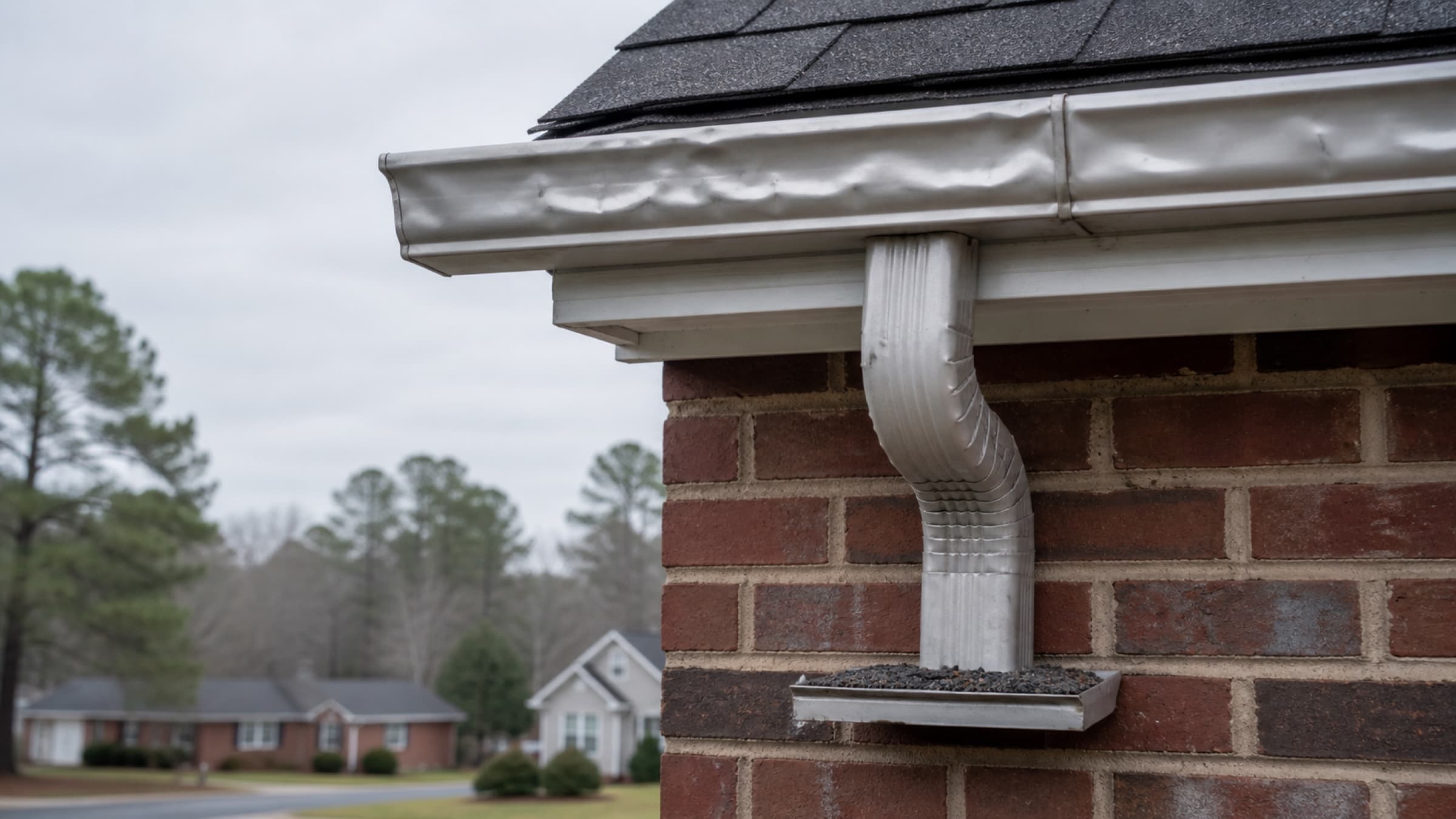
- Photographs of the soft metals: gutters, downspouts, vent caps and flashing. Aluminium dents where a shingle only bruises, so soft metal is often the clearest evidence that hail of a given size fell.
- A written scope of work itemised by material and labour.
- A moisture and decking condition report where the deck is compromised.
- A copy of our licence and certificate of insurance for the adjuster's file.
That package is what we hand you. What you do with it is your decision.
The deductible rule, which is not negotiable
Your deductible is yours to pay, and it is due on completion.
We will not absorb it, discount it, or inflate the scope to cover it. A contractor who offers to "waive your deductible" is committing insurance fraud in North Carolina and exposing you to it, and the offer is a reliable signal to stop the conversation there.
Read your policy for one detail in particular: whether your wind and hail deductible is a flat figure or a percentage of the dwelling coverage. Percentage deductibles are increasingly common in this state and they are considerably larger than people expect.
Actual cash value against replacement cost
This is the term that catches people out.
A replacement cost policy pays what it costs to replace the roof, in two instalments as described above. An actual cash value policy pays the depreciated value and nothing more, so a fifteen year old roof is settled at a fraction of what replacing it costs.
If your roof is old and your policy is ACV, a claim may not be worth filing at all. That is a conversation to have before you file, not after, and it is one we will have with you honestly even though the answer sometimes costs us the job.
When the claim is denied
Denials on hail are common and they are not final.
Reinspection is the usual route: you request one, and your contractor attends with the documentation. A great many denials come from an adjuster who inspected in poor light, or who looked at the sheltered planes, or who found the damage genuinely marginal. Photographs from the day after the storm are what change that conversation.
If reinspection fails and you believe the decision is wrong, that is the point at which a licensed public adjuster is the right person to hire. They act for you, they are regulated, and they charge a percentage. We will tell you that rather than pretend we can do it.
What we charge for while a claim runs
The inspection is flat priced and you get the report whether or not you claim. The documentation package is part of it.
The repair or replacement is quoted as work, on our own scope, at our own price. We do not price a roof at whatever the insurer approved, and we do not adjust the scope to match a settlement figure. If our scope is larger than the insurer's, we supplement it with evidence and you decide.
The whole process, including what we supply and where the line sits, is on the storm damage page.
Three things to do before the next storm
Photograph your roof now, from the ground, on a clear day. A dated before is worth a great deal when you need to prove an after.
Find your policy and read the wind and hail deductible. Once.
Keep the receipt from the last roof work you had done. Age is the single biggest lever on what a claim pays, and a documented installation date beats an adjuster's estimate every time.
The work this article is about
- Roof InspectionAn hour on your roof with a written report and photographs of every plane, so you know what you are dealing with before you spend anything.
- Roof ReplacementA full roof replacement, quoted after an on-site measurement and a materials selection rather than over the phone.
- Storm Damage and Insurance ClaimsWe document storm damage properly, meet your adjuster on the roof, and carry out the approved work. We do not negotiate the claim for you.
Jobs where this came up
- Hail claim and full roof replacement in Five Points, RaleighA hail-damaged roof documented plane by plane for an adjuster, then torn off and replaced in four working days.
- Overnight roof leak stabilised in Chapel HillAn ice storm drove water through failed skylight flashing at night, and an emergency crew stabilised it before the ceiling came down.