HVAC
What a maintenance visit actually covers
A maintenance visit is a measurement exercise, not a cleaning, and the numbers are what tell you what is about to fail.
By Dana Whitfield, Service Manager and HVAC Lead. Published , updated .
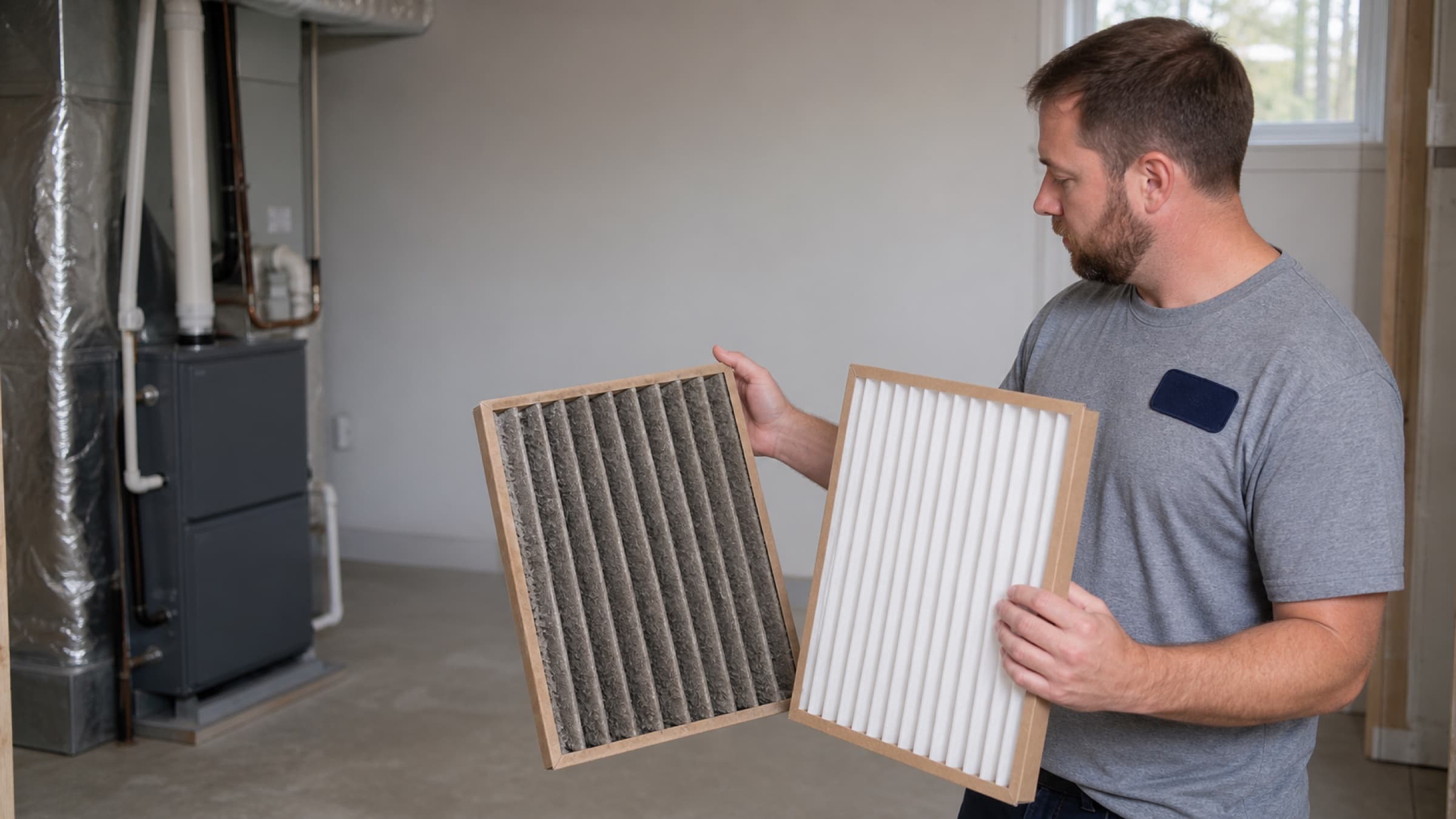
Most people have no idea what they are buying
"Annual maintenance" is sold everywhere and described almost nowhere. Plenty of companies send someone to change a filter, hose the outdoor coil, and leave a sticker on the unit.
That is not maintenance. It is a cleaning with a receipt.
A real visit is a measurement exercise. The technician takes a set of readings, compares them to what the equipment should be doing, and tells you which numbers have drifted. Drift is what predicts failure. Here is exactly what we do, in order, so you can hold us to it or hold anybody else to it.
Before anything is touched: the readings
The first thing that happens is that nothing is cleaned.
Cleaning changes the readings. If the technician washes the condenser coil and then measures the system, the measurement describes a machine that did not exist five minutes earlier and tells you nothing about how it has been running all summer.
So the first pass is diagnostic. Supply and return air temperatures, and the split between them. Refrigerant pressures on both sides, converted to superheat and subcooling, which is how you find out whether the charge is right without recovering it. Amp draw on the compressor and both fan motors, compared to the nameplate. Capacitor microfarads against rating. Static pressure across the air handler, which is the single most useful number nobody measures.
Static pressure is the blood pressure of a duct system. High static means the blower is fighting the ductwork, which means less airflow, worse dehumidification and a shorter blower life. Most residential systems in this region measure well above what the manufacturer designed for, and almost nobody who sells maintenance ever tells the homeowner that.
The electrical inspection
Contactor points get inspected for pitting and burning. A contactor is a cheap part that fails noisily, and it usually gives weeks of warning to anyone who opens the panel.
Capacitors are measured, not eyeballed. A capacitor rated at forty five microfarads that measures thirty eight is still working, and it is going to fail on the first genuinely hot afternoon, which is also the afternoon on which every HVAC company in the county is fully booked. Replacing it in March is the entire argument for maintenance.
Wire terminations get checked for heat damage and tightness. A loose lug generates heat, heat degrades insulation, and that is how a control board dies.
The airflow and drainage work
Filter changed, and the size and rating noted. A high MERV filter in a system that was never designed for the pressure drop causes more problems than it solves, and we will tell you if yours does.
Blower wheel inspected. A blower wheel silted up with dust loses a surprising fraction of its airflow, and it is invisible with the panel on.
Evaporator coil inspected for the same reason. Condensate pan and drain line cleared and flushed, float switch tested by actually lifting the float rather than by looking at it.
Condensate is worth dwelling on, because a blocked drain line is the most common cause of water damage we see from HVAC equipment in this region. Humid air over a cold coil produces a lot of water, and it runs through a small pipe that grows biological sludge in summer. That pipe is why your ceiling gets wet in August.
Outdoors
Condenser coil washed, from the inside out, with a proper coil cleaner rather than a pressure washer that folds the fins over. Fan blade and motor bearings checked. Disconnect inspected. Clearances around the unit checked, because shrubs grown up against a condenser strangle it.
Refrigerant charge is verified but not adjusted unless it is wrong, and if it is wrong we look for the leak rather than topping it up quietly. A system that needs refrigerant has a leak, always. Refrigerant is not consumed.
Heat pumps get a second half
If you have a heat pump, the visit includes the heating side: reversing valve operation tested in both modes, defrost cycle initiated and observed, auxiliary heat strips checked for amp draw on each element, and the outdoor coil checked for the icing pattern that says the defrost board is not doing its job.
That last one matters in this climate. A heat pump running auxiliary strips because a defrost sensor has failed will keep your house warm and will show up as a January bill you cannot explain. Details are on the heat pump page.
What you get at the end
A written report with the readings on it, sent the same day, with anything out of range flagged and explained.
If we find something that needs work, you get the price before we do it. If we find nothing, you get a report that says so, which is worth having when you sell the house.
The visit takes about an hour and a half on one system. Anyone doing it in twenty minutes is not doing the parts above, and the readings are how you can tell.
Timing
Cooling maintenance in April or May, before the first heat. Heating maintenance in September or October, before the first genuinely cold night. Both work best when nothing is broken, which is a hard thing to make yourself book.
That is the actual reason the maintenance plans exist: not the discount, the fact that we call you rather than the other way round. What each plan covers is published there, and what a visit costs on its own is published too.
The work this article is about
- AC MaintenanceA scheduled tune-up for an air conditioning system that is still working, to keep it that way through the season.
- Heat Pump ServiceWe diagnose and repair heat pumps in both heating and cooling modes, including defrost and reversing valve faults.
- Indoor Air QualityWhole-home humidity control, filtration and ventilation, fitted to your existing system.
Jobs where this came up
- Heat pump changeout and duct repair in Wake ForestA failed twenty year old heat pump replaced, with the attic ductwork sealed and two runs resized rather than reused as found.
- Two-system AC replacement and humidity fix in Fuquay-VarinaA house that never dried out in summer, fixed with correctly sized equipment, sealed ducts and a whole-home dehumidifier.