ELEC
When a panel upgrade is actually required
Two of the four reasons to upgrade a panel are safety, one is capacity, and the fourth is that somebody measured rather than guessed.
By Nathan Kwon, Electrical Lead. Published , updated .
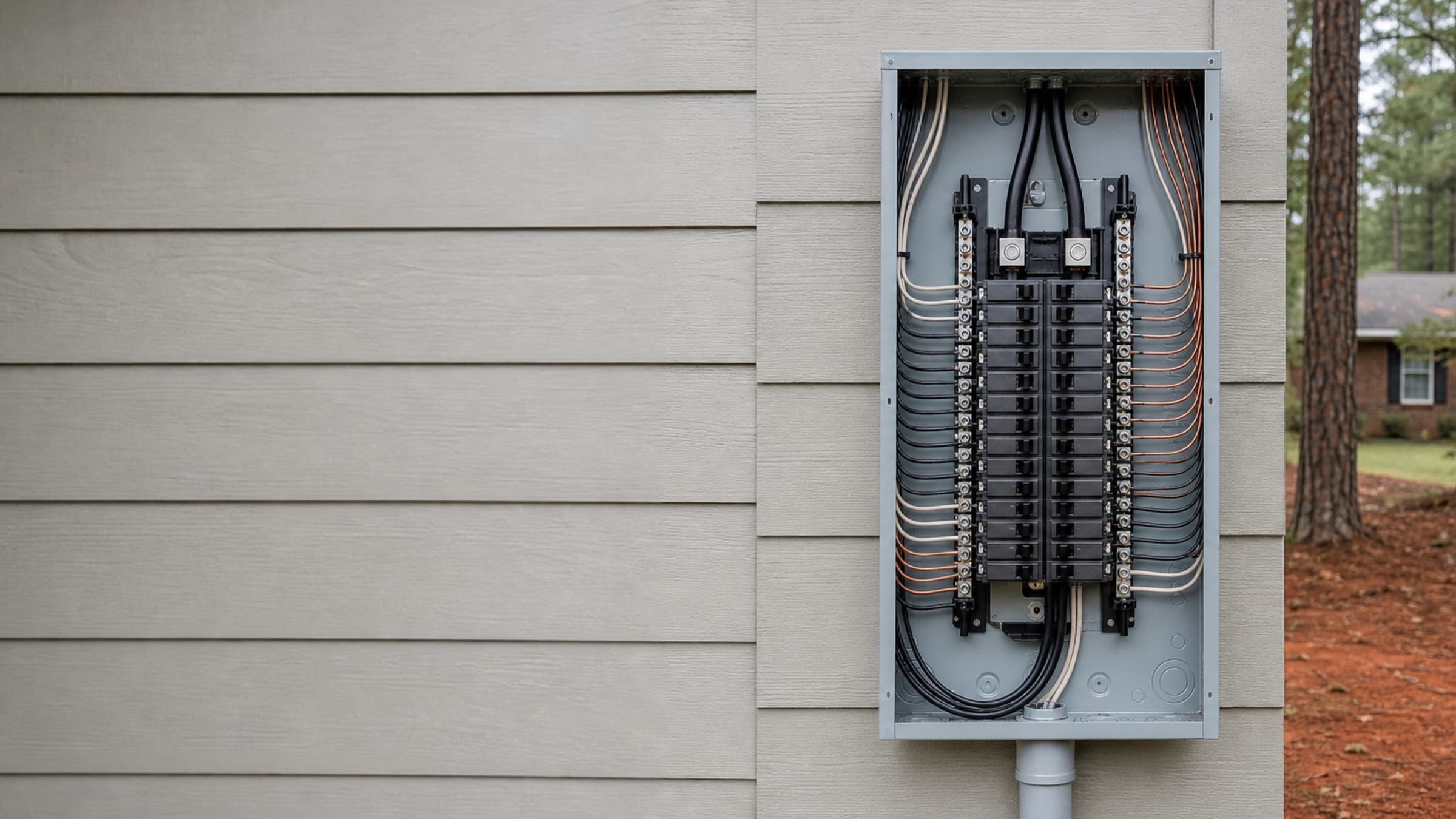
Panel, service, or both
Three different things get called a panel upgrade and they cost very different amounts.
A panel replacement swaps the load centre and re-lands the existing circuits, keeping the same service size.
A service upgrade increases the capacity coming into the house: new service entrance conductors, a new meter base, coordination with the utility for a disconnection and reconnection, and an inspection.
Both together is the common case in an older house, and doing them together is considerably cheaper than doing them a year apart, because you pay for the disconnection once.
When you get a quote, ask which of the three it is. A quote that does not say is a quote you cannot compare to another one.
Reason one: the panel is a known hazard
Some equipment should be replaced regardless of capacity, condition or how well it appears to be working.
Fuse panels are the obvious one. They are not inherently dangerous, but they are old enough that the wiring behind them usually is, they offer no ground fault or arc fault protection, and the fuse holder is trivially defeated with a coin or an oversized fuse, which people do.
Certain panel brands from the 1950s through the 1980s have documented failure histories where breakers did not trip under fault. If you have one, an electrician will recognise it in seconds. That is not a sales tactic, and any competent inspector will flag the same thing.
Signs of heat damage are the third: discoloured or melted insulation at a lug, a burnt smell, corrosion inside the enclosure, or double tapped breakers with two conductors under one screw.
Reason two: the grounding system does not exist
This one is invisible and very common in houses built before the mid 1960s.
A grounding electrode system is what gives fault current a path back and lets a breaker trip quickly. In older houses it is frequently a single clamp on a metal water pipe, and metal water pipes have been replaced with plastic in an awful lot of Triangle houses since, which silently disconnects the entire grounding system.
That was exactly the situation in the north Raleigh ranch we rewired: one clamp, on a pipe that had been partly replaced twenty years earlier, and no functioning ground path.
The fix is driven rods and a bonded water pipe, and it is part of any panel work we do rather than an extra.
Reason three: you genuinely need more capacity
This is the one people assume they have and often do not.
The honest way to answer it is a load calculation. There are two methods, and the difference between them is where the industry's disagreements come from.
The standard method adds up the nameplate ratings of everything in the house with prescribed demand factors. It is quick and it is conservative, and on a house with an older service it very often returns "you need an upgrade".
The optional or existing dwelling method uses actual measured demand over a period, which the code explicitly permits for an existing house. It reflects the fact that your oven, dryer, air conditioning and EV charger do not all run flat out at the same time.
We put a recording meter on the service for a week and calculate from that. On a recent Cary job two other contractors had quoted a service upgrade alongside an EV charger, and the measured demand showed the existing service could carry the charger with margin. No upgrade, and the calculation went to the owner in writing.
Sometimes the measurement says the opposite and the upgrade is real. The point is that it is a measurement either way.
Reason four: you are adding something large
An EV charger, a standby generator, a heat pump, a hot tub, a workshop or a garage conversion all add load, and some of them add it in ways that interact.
A charger is the interesting case, because load management changes the answer. A charger that can be told to back off when household demand rises will often fit on a service that could not carry it at full output continuously. That option is worth asking about before agreeing to an upgrade.
What does not require an upgrade
- A full panel with no spare breaker spaces. Tandem breakers, if the panel is listed for them, or a small sub panel, are both cheaper answers.
- One circuit that keeps tripping. That is a circuit problem. See why your breaker keeps tripping.
- Lights that flicker when the AC starts. Usually normal inrush. Worth checking, rarely a service problem.
- Age alone. A sound panel of adequate capacity with a proper grounding system does not need replacing because it has a date on it.
How to read a quote
Ask for four things:
- Which of the three jobs it is, in words.
- The load calculation, and which method produced it.
- Whether the grounding electrode system is included.
- Whether the permit, the utility coordination and the inspection are included, and who meets the inspector.
We do all four as standard on a panel upgrade, and the inspection that precedes the quote is priced separately and honestly on the safety inspection page.
Panel and service work is above the financing minimum, so the monthly figure is available before you decide.
The work this article is about
- Panel UpgradeReplacing an undersized, obsolete or failed electrical panel, with the utility disconnect and reconnect coordinated for you.
- EV Charger InstallationLevel 2 home charger installation, with a load calculation first so we know your panel can carry it before anything is ordered.
- Generator InstallationStandby generator installation with a transfer switch, sized to the circuits you actually need rather than to the whole house.
- Electrical Safety InspectionA written inspection of the panel, grounding, protection and wiring, with findings prioritised by actual risk rather than by what we could sell you.
Jobs where this came up
- EV charger and garage rewire in CaryA level 2 charger installed without the panel upgrade two other companies had insisted on, plus a garage lighting and outlet rewire.
- Fuse panel to modern service, plus a standby generator, in RaleighA sixty year old fuse panel replaced with a modern service and a standby generator on an automatic transfer switch.